“Of course, you don’t know the answer. How would you?”
It was 1:45 am as I had this lightbulb moment, right after we had put our 1-month-old to sleep. And while a part of me wants to refrain from sounding overly dramatic — the insight changed the way I think about my client engagements.
This change is a harder sell, and it probably puts me at a disadvantage compared to most other “Content Experts” and “Agencies.”
So be it. Let me tell you what it is, because it might just relax you as you share your insights and expertise with the world. But first, some back story.
When I was a ghostwriter
My job was to tell stories on behalf of my clients — make them look good and smart. Package their insights in a LinkedIn-friendly way. The game demanded that.
Most marketing is about performance. The whole point is to project yourself as an expert who has all the answers. Be someone who has figured it all out and is now sharing that expertise to help others.
I carried the same attitude in my new business
As I helped my clients find their Big Idea and publish a coherent body of work around it, my instinct was to make them look smart and competent. It carried a posture: “You’ve figured this out already. Now let’s just find a way to tell your story.” Sure, we don’t want to come across as incompetent. But something about that advice felt incomplete.
But David C. Baker thought differently
David C. Baker is the advisor the NY Times called “the expert’s expert.” But he didn’t build that by writing about what he’d already mastered. He made a list of topics he was confused about (questions he didn’t know the answers to) and began exploring them through his writing. Over time, he published a body of work. He never set out to be the expert’s expert… that title was the by-product.
The pattern repeats everywhere.
Thought leaders don’t take the posture of a monk on a mountain handing down a sermon. They’re more like a sherpa. They are still climbing, still working out the route. They’ve committed to a problem. They don’t have the answers yet, but they have a hunch. And they document what they find along the way.
You can see how different that is from the other posture: “I know the answer. Respect me, admire me. Here’s some content built to make me sound smart.”
This is 99% of LinkedIn.
Those who avoid this uncertainty
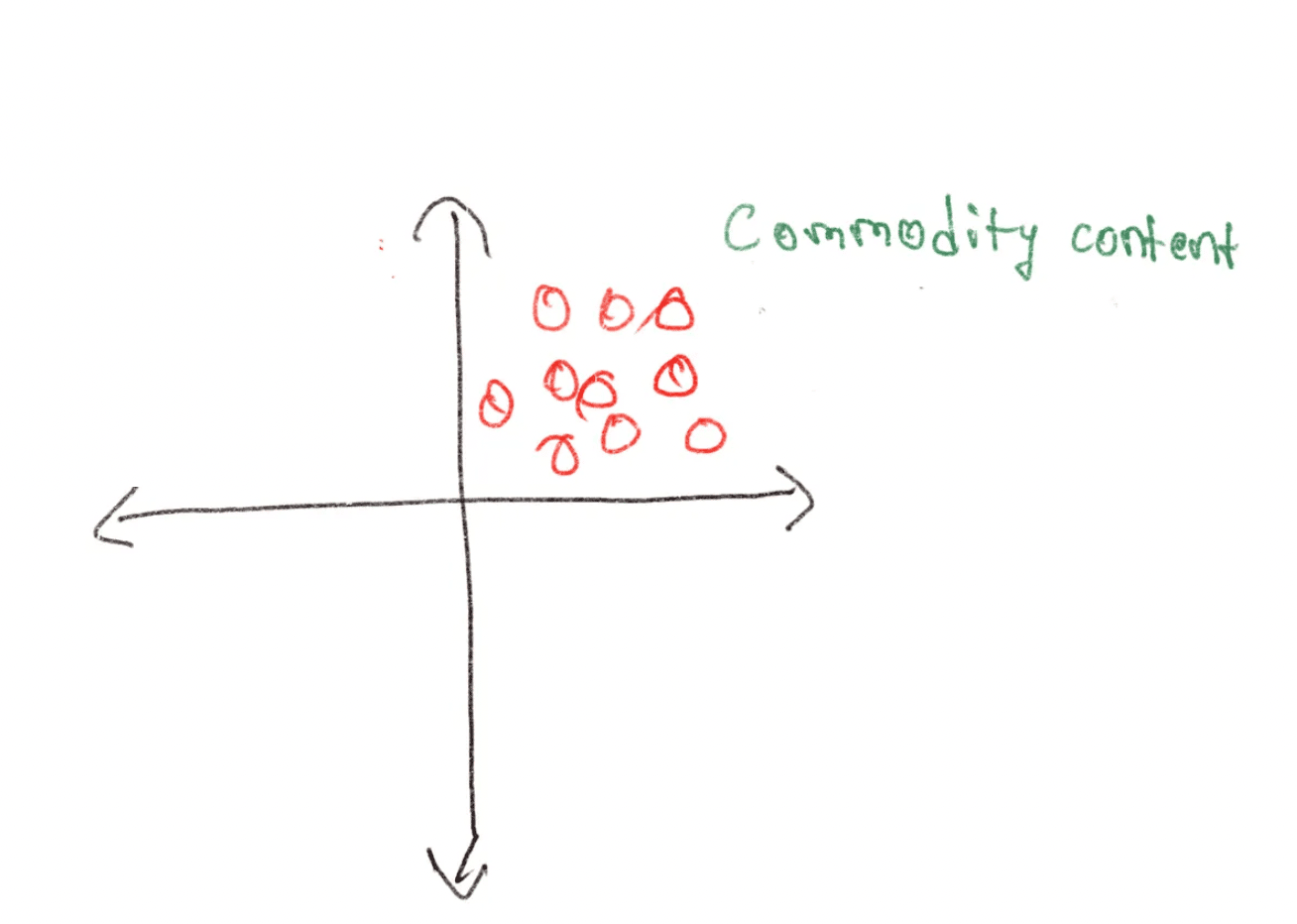
They get stuck in an endless cycle of commodity content simply because they never took the leap. They’re playing it safe by “performing.”
This performative content (the kind that only aims to make us sound smart) is being commoditized fast.
 It’s not that thought leaders don’t teach
 It’s not that thought leaders don’t teach
At some point, they’re happy to share what they’ve found. But for someone like David C Baker, the expertise was the symptom of the work, which is different from wearing a mask.
There is no roadmap
As we lean into the unknown, it becomes clear there’s no roadmap. Nothing’s been figured out. No specific steps, no definite answers. But there are questions. There are frustrations.
One of my clients is sitting with the question: In the age of AI, how can we communicate with Data better?
Another is wrestling with: Why do connected-product companies always struggle to ship on time?
A third is asking: how does a founder stand out when every pitch sounds the same?
What is your question?
Can you lean into it? Embrace the uncertainty, and see where it takes you? Not every path will be interesting. Some will be dead ends. If you are anything like me, this should feel like a burden lifted. You are not expected to know everything. How would you? Nobody has done it before you. You are merely expected to commit to this problem.
The aha moment
My job isn’t merely to make my clients look smart. Sure, that’s part of it. Communication is very, very important. But before communication comes the exploration. The thinking. My job is to encourage my clients to step into the unknown and find their own answers.
Uncertainty is not to be avoided. Uncertainty is the point. If it had been figured out already, they wouldn’t need us.
As the baby snored peacefully, my eyelids grew heavy, and I drifted off. The question didn’t feel like a weight anymore. It felt like a place to begin.